








İstanbul Technical University Faculty of Business and Management
The main purpose of the project is to maximize the interaction between individuals for a better educational environment by using open, semi-open and closed common use spaces. These common spaces also creates permeability for campus circulation and articulate the building block with simplified vertical circulation cores. This monoblock building aims to reduce the distinction between instructive and learners.
The design of the building tends to the distance between nature and the macro-environment and defines it as a problem that should be solved on a micro-scale. To provide that, the building creates different kinds of biophilic relations with plants and natural light strategies, in consideration of human’s evolutionary process and indirectly from this, user’s mental and physical health. These biophilic design strategies also creates automated natural light control and cooling of the building caused by plant transpiration in consideration of global warming that worsening in the years to come.
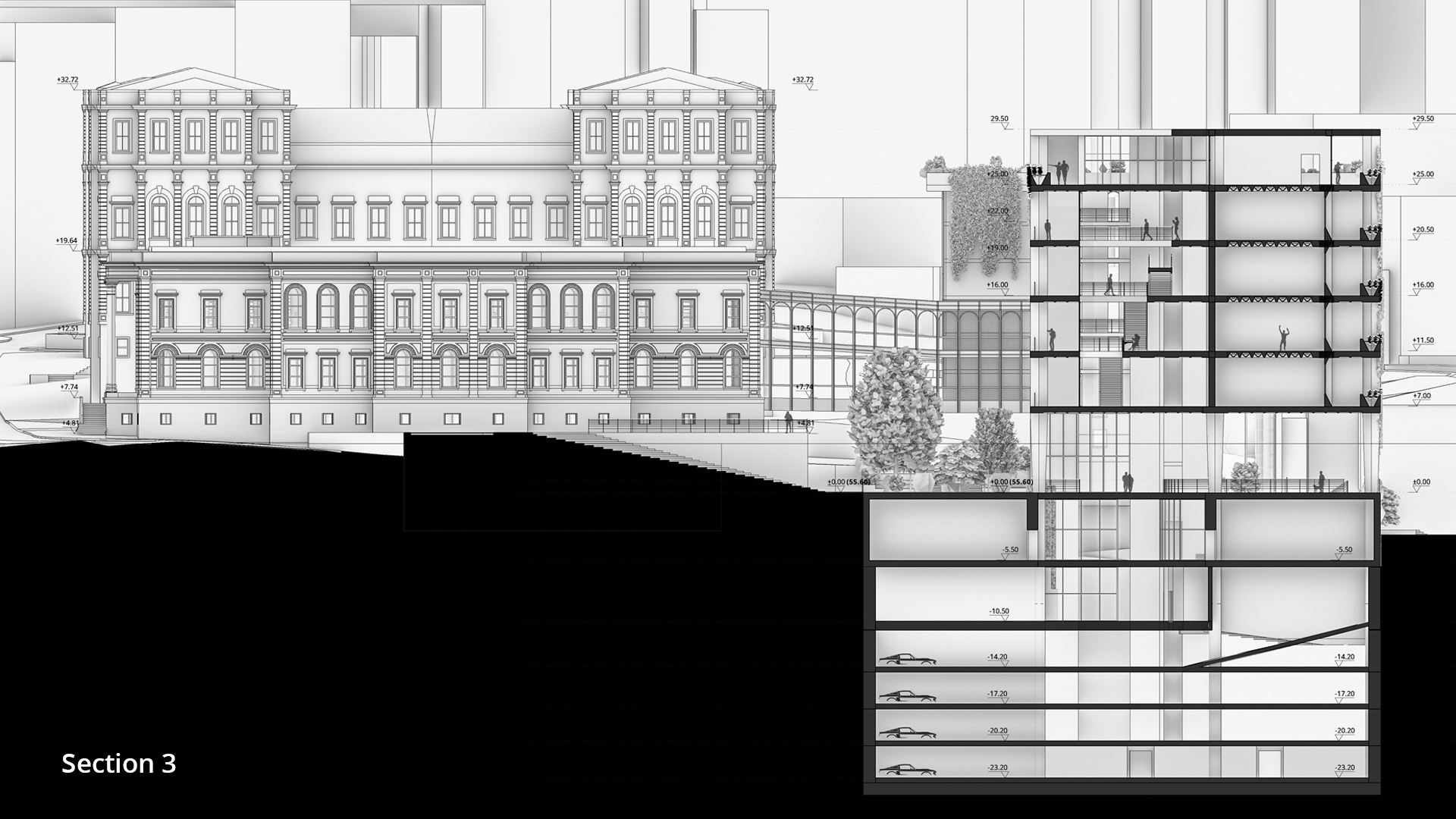
The new and the old (Karakolhane) buildings connects by a two-storey composite structure bridge and works as one. This bridge provides distance between old and new buildings in order to maintain visual connection between facades and to use natural light coming from the south.
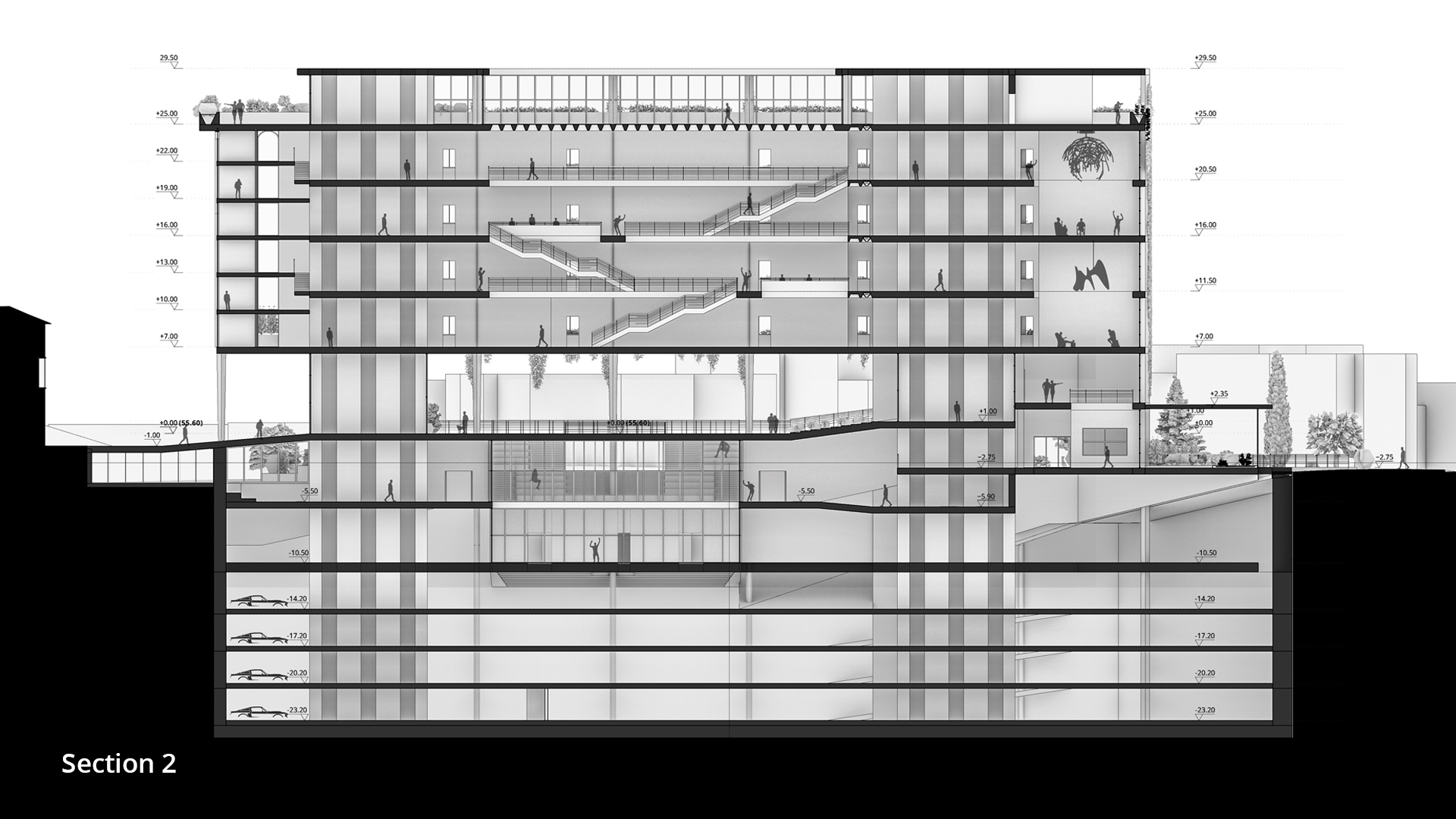
The staircase, which is currently located in the north of the building, was cancelled due to its impermeability. Instead, the tree that needs to be protected, abandoned by the user with its claustrophobic environment, +55.6m (0.00m in the new leveling system) level where Tilia cordata number ten is located, the staircase that has been canceled by showing the feature of a square in the new setup designed between the new building and the old building. Instead, it has been provided to act as an intermediate landing within the installed setup. The basic setup of the building was separated from each other as upper and lower classes, and the classroom and office masses were lifted to +7.00 level on the columns, thus keeping the open space use and permeability at the maximum level. Amphitheater classrooms are positioned below the level of this square, carrying the level created in its inner mass to the top at different rates, thus enhancing the fluidity of the building perpendicular to the slope with a wide platform, it feeds into the slope with a diverse, uninterrupted stair setup with landscaped sub-squares, thus reducing the vertical tension. Cancellation of the existing staircase, two different floors that fit on the axle, allows new spaces to be created under it. At the same time, it has been proposed to use these spaces as closed common areas and to create new functions such as study, recreation and exhibition areas. The area, which is currently used as an open car park, which this axis faces, was also envisaged to create a sub-square by being improved with landscaping, but it could not be shown in the drawing set due to the intensity of our work schedule.
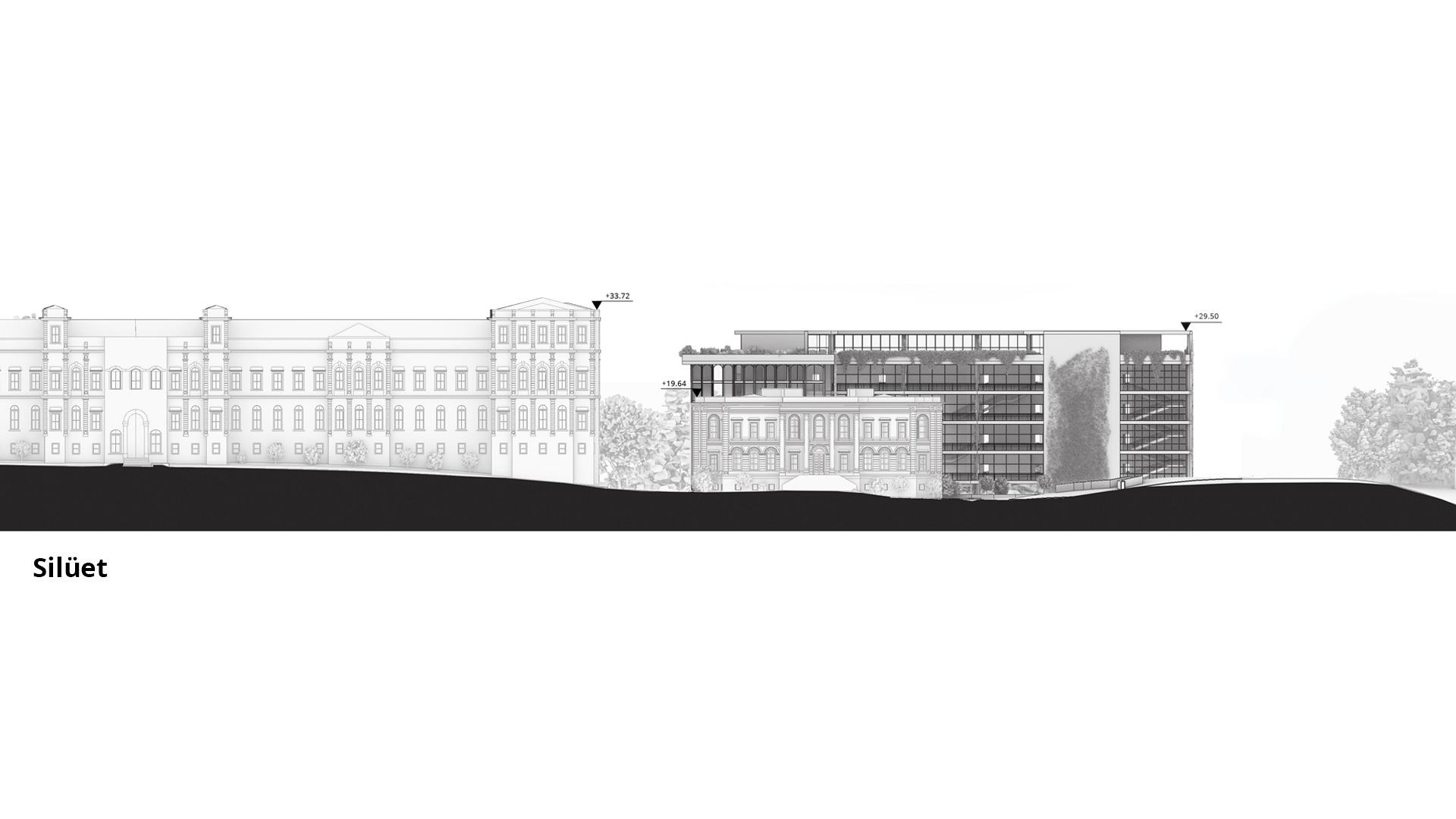
The structure, the design created on the ground plane, at the user scale, it has risen in a way that does not tire the scales of Karakolhane and Silahhane and does not cut the visual relationship of their buildings, in line with the perspective of Süleyman Seba street, the most active facade it has touched. This elevation also evaluated the use of vista at the upper levels of the building’s location. The canteen volume, located on the classroom and office floors, is surrounded by an ecological setup, and its relation with the city is increased with the panorama it creates around it. At the same time, it aimed to reduce the usage density, which is estimated to occur in the cafeterias, by connecting six elevators to the floor of the cafeteria structure, which is located perpendicular to the vertical circulation axes of the building at the -1.00m level.
By positioning the main entrance on Süleyman Seba street, the building has increased its accessibility by keeping the entrance level at the level where it touches the street and defining the entrance volume separately from the other volumes of the faculty. The corridor between the construction boundary and the Karakolhane is connected to the zero level with a ramp. The staircase setup following this ramp connects the library volumes located inside the Karakolhane. At the same time, it has also eliminated the sense of closure created by the idle warehouse volume at the corner where the Karakolhane touches the land border.
It is aimed to emphasize the potential value of the basement spaces of the Karakolhane, which are neglected and idle today, by loading sustainable functions together with the structural interventions needed by the building.
While deciding to reuse the building, it was given importance to include the administrative prestige spaces within the scope of needs. Considering the current pedestrian flow dynamics, it is aimed to increase the open space utilization potential of the area by removing the inactive reinforced concrete warehouse and the library function envisaged in the south-west arm of the basement floor of the south-west courtyard, which is relatively out of use despite its potential value.
Since university buildings periodically have more users, the general plan setup is kept as readable as possible so that the circulation of the users within the building is useful.
Exposed concrete and steel, which are the main materials of the building, have been designed with the consideration of the life-cycle of the building and it is aimed to limit the variety of materials at the upper scale. At the same time, it aimed to allow the defined surfaces to be formed spontaneously over time by the campus users and nature.
My Service
Research, Planning, Concept Design, 3D modeling, Visualization, Model making
Term of Office
2 months
Typology
Architecture, Educational, Restoration, Adaptive Reuse, Renovation
Program
Classrooms, Amphitheaters, Library, Conference Hall, Car park, Instructor and Administrative offices, Meeting Rooms, Labs, Canteen, Cafe, Student Clubs, Technical areas, Service areas. Etc.
Location
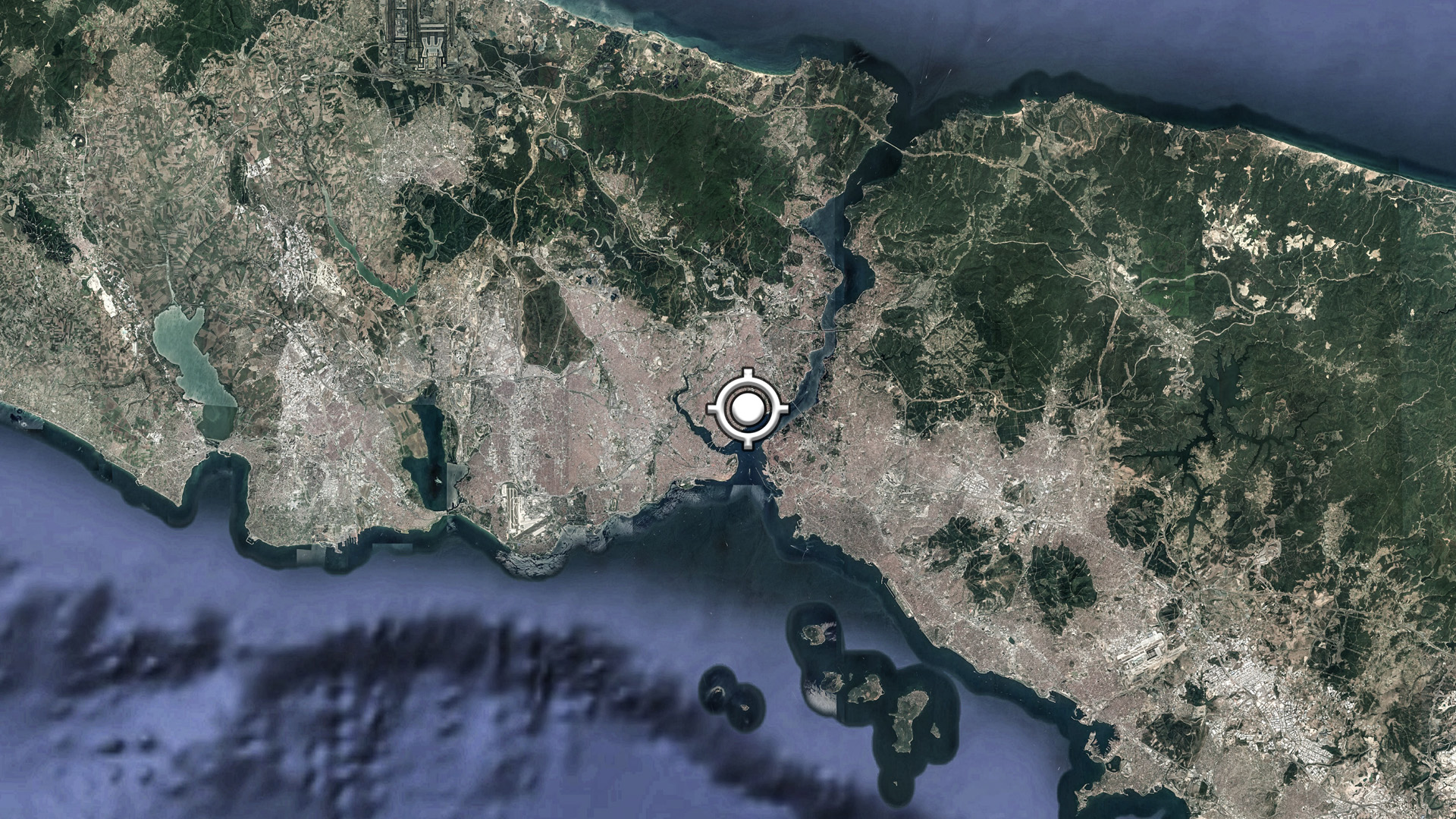
Maçka, Beşiktaş, İstanbul
Year
2019
Status
Concept
Size
3.500m²
Client
İstanbul Technical University
Team
Batuhan Gullu, Tugba Agcabay
